![Digital Psychology [AI]](https://substackcdn.com/image/fetch/$s_!zVNc!,w_120,h_120,c_fill,f_webp,q_auto:good,fl_progressive:steep/https%3A%2F%2Fsubstack-post-media.s3.amazonaws.com%2Fpublic%2Fimages%2Fc73bd2d6-9fc0-4b81-ae96-d358ad4236cb_1280x1280.png)
![Digital Psychology [AI]](https://substackcdn.com/image/fetch/$s_!I4xi!,e_trim:10:white/e_trim:10:transparent/h_72,c_limit,f_auto,q_auto:good,fl_progressive:steep/https%3A%2F%2Fsubstack-post-media.s3.amazonaws.com%2Fpublic%2Fimages%2Fee5d07fd-c2fc-4091-a50e-eecc08faf7ff_866x332.png)
1 • Human-Centered Artificial Intelligence
How much of a human being is there in AI?

In an interesting and fresh study (from 2022), researchers at the University of Queensland in Australia attempted to answer the question:
is artificial intelligence sufficiently human-centered?
The qualitative study was conducted with a fairly small sample: AI developers (N=75) and users (N=130), and responses were analyzed thematically to gain insight into developers' priorities and users' experiences.
Given the freshness of the survey, as well as the growth of the AI industry and the small sample size, the survey is worth treating rather as interesting findings, thought-provoking and to be taken into account when creating your AI-based products and services.
tl;dr
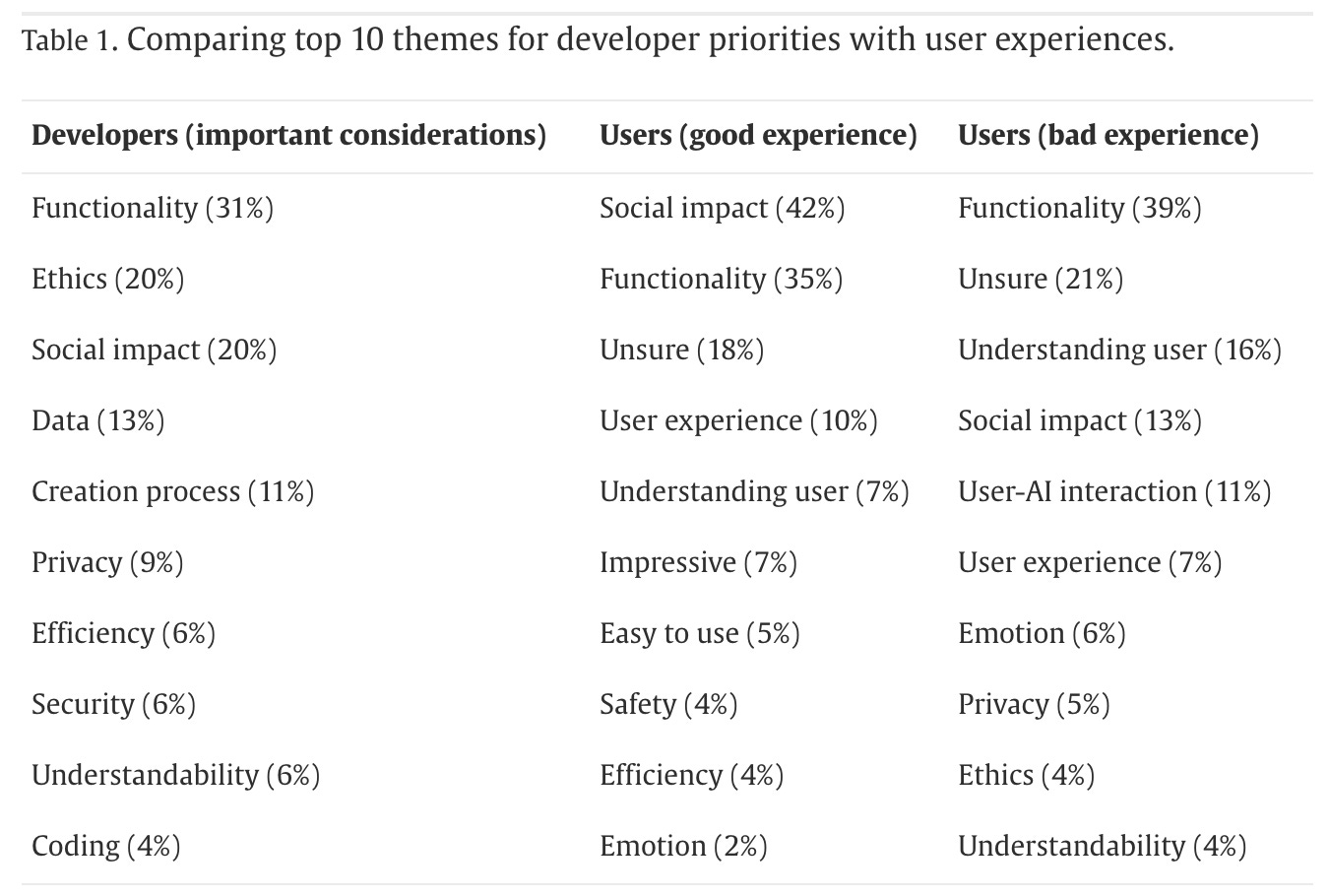
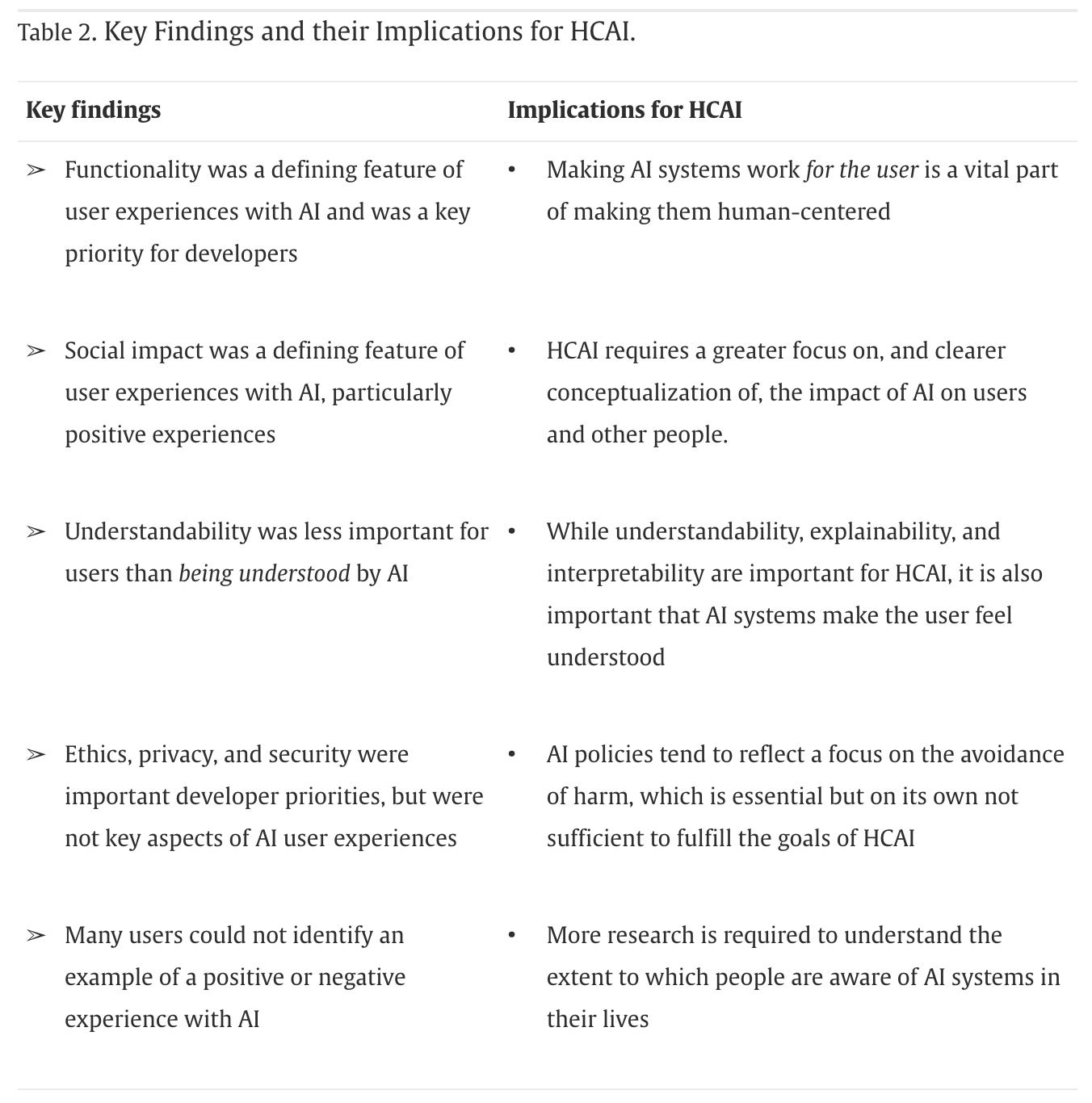
Highlights from developers priorities vs. UX study:
Social impact of AI was a defining feature of users' positive experiences, but this was less of a priority for developers.
Functionality of AI was key for both users and developers.
AI understandability was less important for users than being understood by AI.
Ethics, privacy, and security were considered to be important by developers, but were not key themes of user responses.
Btw. if you're wondering if there's already an AI-based app that could solve your problem, there's a good chance there is - and you can check it out here - in a chatbot, based on ai, which will check for ai
Human Centered AI - theories, principles and practices
We've already established that artificial intelligence, while it hasn't been developing since yesterday, but for years here you can see a timeline of AI development, its decidedly more widespread use and market adoption accelerated with the advent of the now famous chatGPT = more people outside the tech bubble became aware users of AI-based products and services. And the unaware ones were much earlier - why? If you use at least Google's translator, Siri's voice assistant, or have an autonomous robot vacuum cleaner at home, that means you've long been in the user of an AI-based system. Surprise?
Reflecting the growing importance and integration of AI in people's lives, there is a movement toward human-centered AI (HCAI), which aims to put the user, not the technology, at the center of AI development. The HCAI approach advances the goals of AI while ensuring human control.
Shneiderman (2020) goes a step further and compares it to the "second Copernican revolution," which puts humans, not algorithms, at the center.
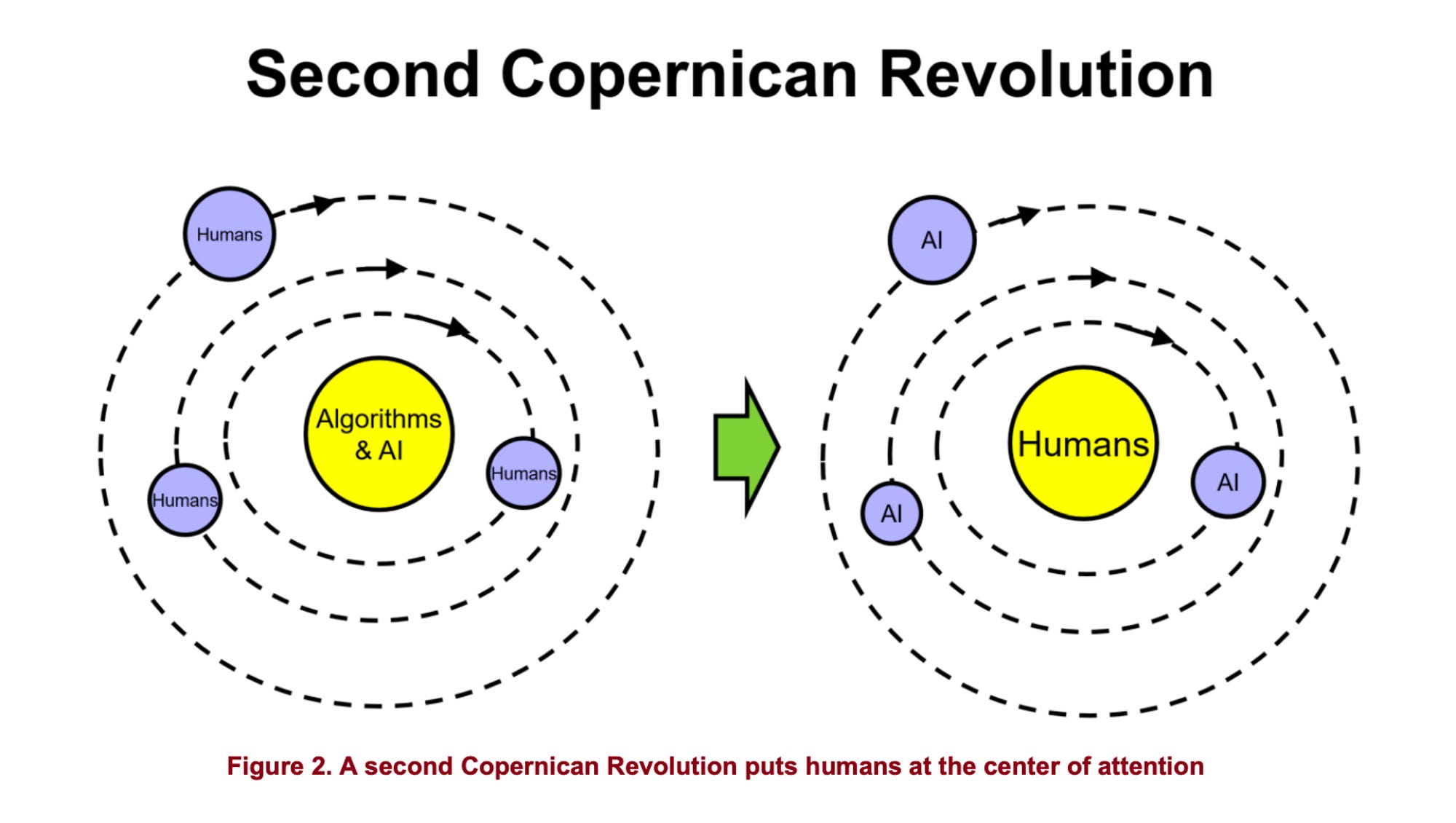
For Shneiderman (2020b, p. 2), HCAI focuses on human experience, satisfaction and needs, aiming to:
Enhance, extend and improve human action in ways that make systems reliable, safe and trustworthy, to foster human self-efficacy, encourage creativity, clarify accountability and facilitate creativity, clarify responsibility and facilitate social participation.
However, there are different interpretations of the meaning of "human-centered," such as:
Gillies et al. (2016) focus on human work that goes into training and algorithm development
Yang et al. (2021) emphasize the social impact of AI
for many researchers, a key feature of HCAI is that AI should be transparent and explainable
All of these conceptualizations of HCAI are fundamentally driven by the recognition of humans as the primary focus of AI development and vary largely as a function of the context in which the approach is applied.
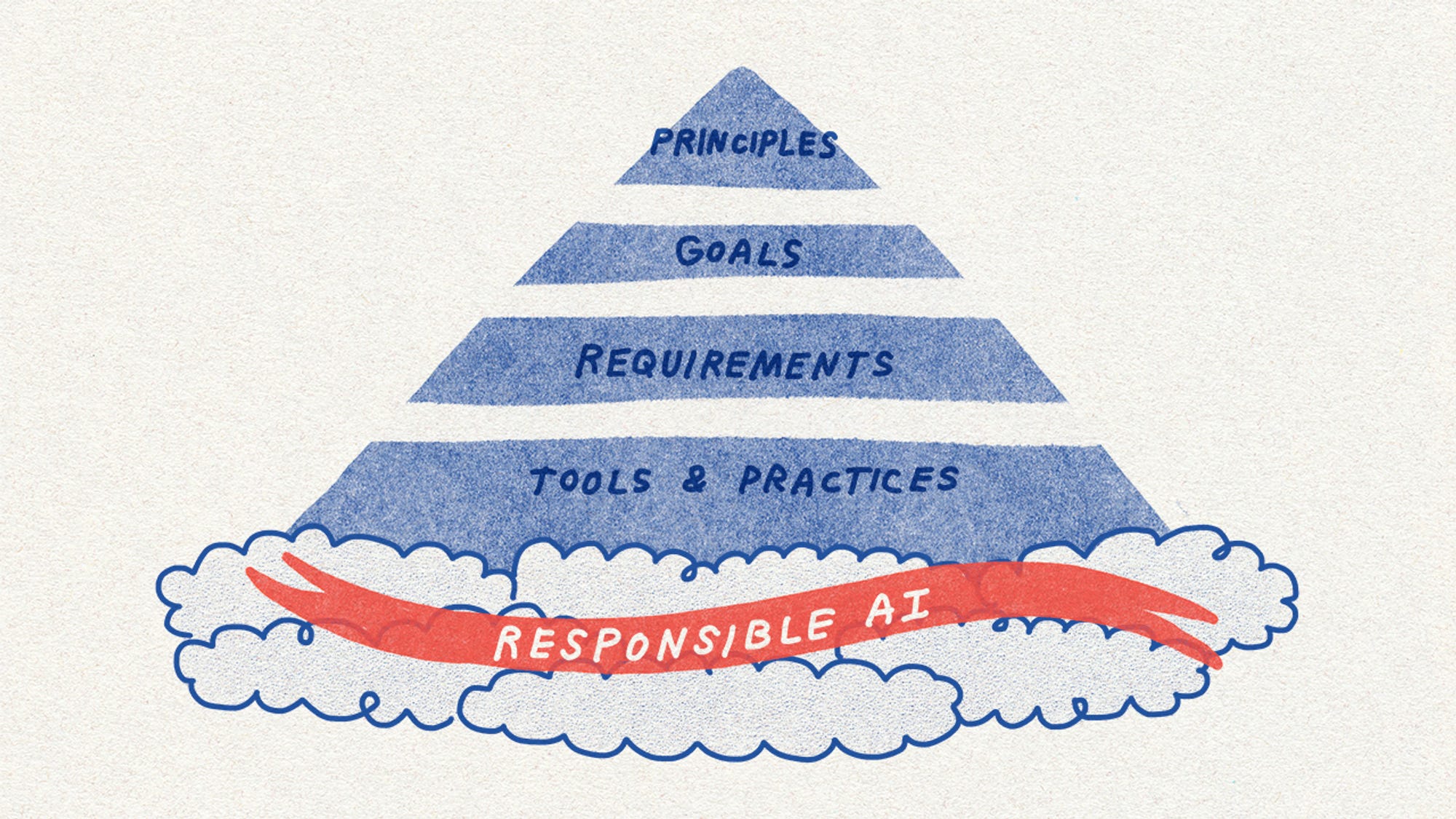
Formalized requirements for AI
In an effort to formalize these changes, governments, organizations and researchers have proposed a series of guidelines to translate the ideals into practice.
Some of these are:
The European Comission lists seven key requirements that AI systems should meet
The Australian government has developed an AI code of ethics
A very important commentary and critique on defining AI ethics:
Shneiderman (2021) argued that while ethical guidelines are a step in the right direction, they are
often too vague to be helpful to software engineers.
Similarly, Mittelstadt (2019) criticized AI ethics for:
consisting of vague principles and lofty value statements that lack the specificity and precision needed to make concrete recommendations for improving practice.
Study on developers’ priorities and users' AI experiences
The Australian researchers set out to verify how well the above-mentioned concepts and theories are taken into account in practice.
Research questions:
Do developers' priorities overlap with users' experiences?
Are developers' priorities consistent with HCAI principles (i.e., theories, guidelines, and principles)?
Is HCAI in the broad sense (including HCAI principles and creators' priorities) consistent with users' experiences?
Key findings:
The most common themes (out of 10) that the respondents referred to:
Social impact
Functionality
Example responses related to the coded theme:
Social impact
Answers to the question: "What good experiences have you had with AI?"
"I find Siri very helpful. As a parent, I often have my hands full."
"As someone who doesn't really like to call directly, [customer service chatbot] was very helpful to me."
Functionality
Answers to the question: "What good experiences have you had with AI?"
"Alexa. The algorithm tailors ads based on your actions and what you like."
"Google Maps, finding good routes with accurate time predictions."
P.S. This post was written in 100% by a human.